Placeholder Definitions
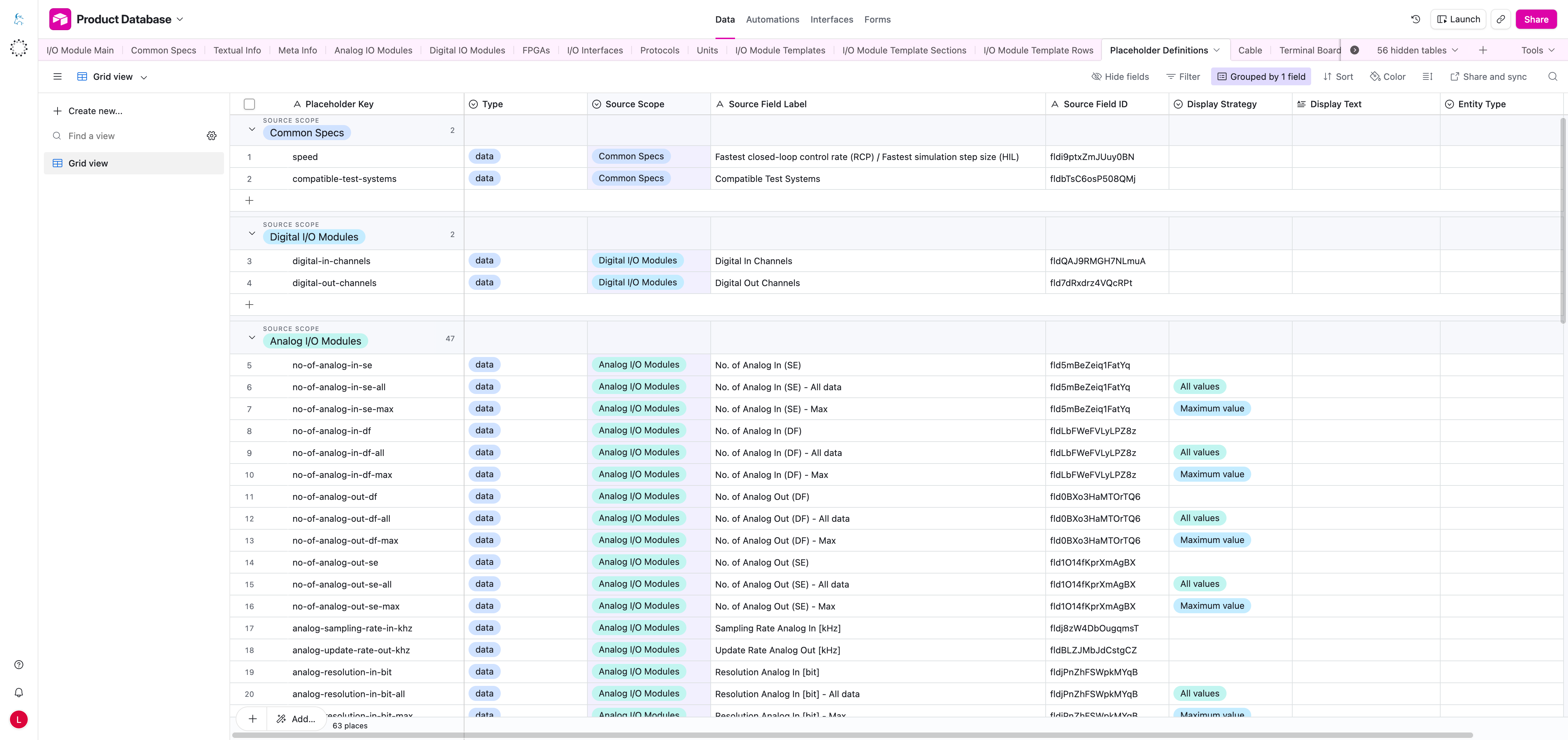
The Placeholder Definitions table explains what each placeholder means and how it should be filled.
It is the central place for placeholder rules used across Airtable templates.
Important Columns
| Column | What it means |
|---|---|
Placeholder Key | The key used inside templates, without {{ }}. |
Type | How the placeholder is resolved. |
Source Scope | Helper grouping for editors. |
Source Field Label | Human-readable source field name. |
Source Field ID | Technical Airtable field ID used by data placeholders. |
Display Strategy | How multiple data values are shown. |
Display Text | Unit text for unit placeholders or visible link text for link placeholders. |
Entity Type | Used by entity-link-token placeholders. |
Placeholder Types
The supported placeholder types are:
dataunitentity-link-token
How To Use This Table
- Do not include braces in
Placeholder Key. - Use kebab-case for placeholder keys.
- Data placeholders rely on
Source Field ID. - Unit placeholders rely on
Display Text. - Link placeholders rely on
Entity TypeandDisplay Text. - Use the type-specific pages below when you need more detail about how each placeholder type is used.
note
Placeholder definitions store the normal key only, without any modifier.
Example:
Placeholder Key:sampling-mode-analog-out- Template usage:
{{sampling-mode-analog-out | lower-first}} - Template usage:
{{voltage-range-analog-in | underline}}
tip
If you are unsure which placeholder to use, start from the row you are editing and check which value type it needs: data, unit, or link.